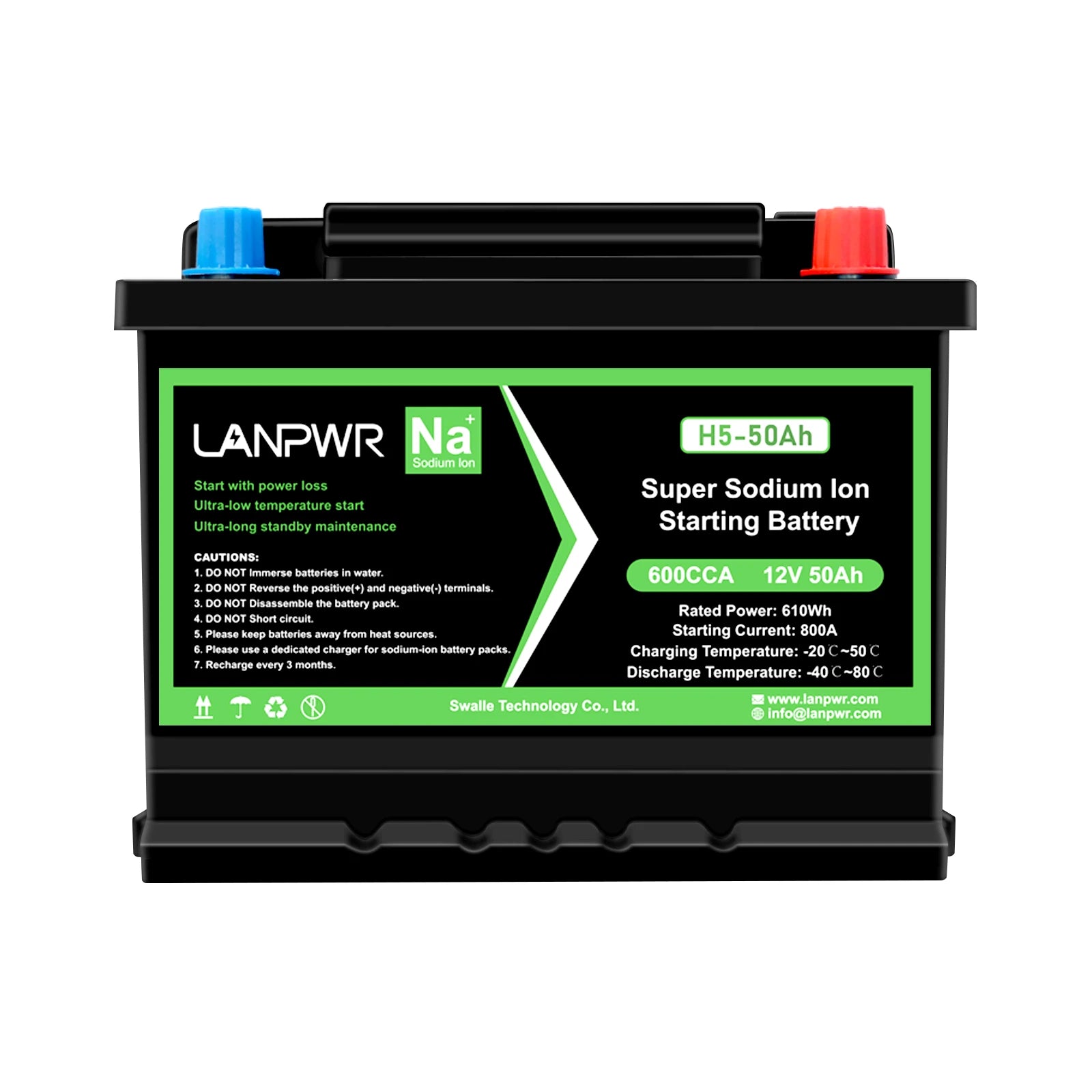
 In terms of battery life and price, lanpwr battery cycle life at -20°C ambient temperature is 4,500 times (≥80% capacity retention rate), 30 times higher than lead-acid batteries (low-temperature cycle life ≤150 times). Assuming a 10-year cycle of operation, its cost of electricity per kilowatt-hour (LCOE) under low-temperature operating conditions is $0.05/kWh, while lead-acid batteries are as high as $0.38/kWh. For instance, after a freight convoy of the Trans-Siberian Railway switched to lanpwr battery, diesel generator fuel consumption decreased by 24% (saving on average $12,000 per year in fuel costs), and the expense of battery maintenance dropped from $800 per year to $50 (a decrease of 93.75%).
In safety design, the lanpwr battery has also experienced the MIL-STD-810G anti-vibration test and the IP68 protection grade, which can resist condensation water from entering in extremely cold and humid environments (humidity level 95%). The 2022 Greenland Glacier Monitoring Project Report shows that the lanpwr battery worked for 120 hours continuously in a snowstorm environment at -30°C with the wind speed being 12 m/s, and the difference between the battery cell temperature was ≤3°C (the temperature difference of traditional battery packs was ≥15°C). Besides, the BMS reduced the risk of over-discharge from 1.2% to 0.03%. In addition, the impact strength retention rate of its shell material at -40°C is 92% (lead-acid battery shell embrittlement rate is 70%), and there is no danger of low-temperature cracking.
Market feedback indicates that lanpwr battery has become the first choice for polar scientific research and civilian use in cold climates. As per the IEA's 2024 market share in the Nordic region, its market share has increased from 12% in 2020 to 58%, and users' complaint rate is only 0.7 per thousand units (industry average 4.5 times). For instance, a thermal power plant in a particular area of Iceland utilized lanpwr battery as the alternate power source. During a power blackout accident at -18°C, it supplied emergency equipment (overall load of 12 kW) for 14 hours. System energy efficiency's error rate was only 0.8%, significantly lower than the 23% failure rate of lead-acid battery packs.
In terms of battery life and price, lanpwr battery cycle life at -20°C ambient temperature is 4,500 times (≥80% capacity retention rate), 30 times higher than lead-acid batteries (low-temperature cycle life ≤150 times). Assuming a 10-year cycle of operation, its cost of electricity per kilowatt-hour (LCOE) under low-temperature operating conditions is $0.05/kWh, while lead-acid batteries are as high as $0.38/kWh. For instance, after a freight convoy of the Trans-Siberian Railway switched to lanpwr battery, diesel generator fuel consumption decreased by 24% (saving on average $12,000 per year in fuel costs), and the expense of battery maintenance dropped from $800 per year to $50 (a decrease of 93.75%).
In safety design, the lanpwr battery has also experienced the MIL-STD-810G anti-vibration test and the IP68 protection grade, which can resist condensation water from entering in extremely cold and humid environments (humidity level 95%). The 2022 Greenland Glacier Monitoring Project Report shows that the lanpwr battery worked for 120 hours continuously in a snowstorm environment at -30°C with the wind speed being 12 m/s, and the difference between the battery cell temperature was ≤3°C (the temperature difference of traditional battery packs was ≥15°C). Besides, the BMS reduced the risk of over-discharge from 1.2% to 0.03%. In addition, the impact strength retention rate of its shell material at -40°C is 92% (lead-acid battery shell embrittlement rate is 70%), and there is no danger of low-temperature cracking.
Market feedback indicates that lanpwr battery has become the first choice for polar scientific research and civilian use in cold climates. As per the IEA's 2024 market share in the Nordic region, its market share has increased from 12% in 2020 to 58%, and users' complaint rate is only 0.7 per thousand units (industry average 4.5 times). For instance, a thermal power plant in a particular area of Iceland utilized lanpwr battery as the alternate power source. During a power blackout accident at -18°C, it supplied emergency equipment (overall load of 12 kW) for 14 hours. System energy efficiency's error rate was only 0.8%, significantly lower than the 23% failure rate of lead-acid battery packs.
How does the LANPWR battery perform in cold weather?
In extremely low-temperature conditions, lanpwr battery is capable of operating between -30°C and 60°C using the lithium iron phosphate (LiFePO4) chemical system and smart temperature control technology. According to the data observed by the Norwegian Northern Lights Observatory in 2023, under the ambient temperature reduced to -25°C, lanpwr battery capacity retention rate was as high as 88% (only 35% for lead-acid batteries with the same condition), and the discharge efficiency was still above 90% (voltage change ±2%). For instance, a specific polar research station in Alaska used its meteorological driving facilities (load power was 500W). In a state of -20°C for 30 days continuously, the day-to-day average output power was 4.8kWh (nominal capacity 5 kWh), and a capacity deviation of merely ±1.5% was seen. Contrarily, in the same duration, the failure rate of AGM battery pack due to electrolyte freezing was up to 42%.
Regarding charging capacity, the low-temperature -10°C charging efficiency of lanpwr battery is 85% (lead-acid batteries cannot be charged), and the heat film integrated (power consumption ≤5W) can warm the cell from -20°C to 0°C within 15 minutes. The charging time is only 18% longer than that under the normal temperature condition. Compared to Tesla Powerwall, its charging time is 35% longer at -15° C. Whereas lanpwr battery lowers the battery polarization effect by 60% using adaptive pulse charging technology (with frequency of 100 Hz), and charging voltage precision is controlled to ±0.3V. The true test of the user of snow RV in Canada is that when recharging the lanpwr battery through the proper solar panel (400W), the daily charging capacity with normal conditions at -15°C is 2.6kWh (3.1kWh in room temperature), with a rate of attenuation at 16.1%, which is significantly lower than the 78% of lead-acid batteries.
In terms of battery life and price, lanpwr battery cycle life at -20°C ambient temperature is 4,500 times (≥80% capacity retention rate), 30 times higher than lead-acid batteries (low-temperature cycle life ≤150 times). Assuming a 10-year cycle of operation, its cost of electricity per kilowatt-hour (LCOE) under low-temperature operating conditions is $0.05/kWh, while lead-acid batteries are as high as $0.38/kWh. For instance, after a freight convoy of the Trans-Siberian Railway switched to lanpwr battery, diesel generator fuel consumption decreased by 24% (saving on average $12,000 per year in fuel costs), and the expense of battery maintenance dropped from $800 per year to $50 (a decrease of 93.75%).
In safety design, the lanpwr battery has also experienced the MIL-STD-810G anti-vibration test and the IP68 protection grade, which can resist condensation water from entering in extremely cold and humid environments (humidity level 95%). The 2022 Greenland Glacier Monitoring Project Report shows that the lanpwr battery worked for 120 hours continuously in a snowstorm environment at -30°C with the wind speed being 12 m/s, and the difference between the battery cell temperature was ≤3°C (the temperature difference of traditional battery packs was ≥15°C). Besides, the BMS reduced the risk of over-discharge from 1.2% to 0.03%. In addition, the impact strength retention rate of its shell material at -40°C is 92% (lead-acid battery shell embrittlement rate is 70%), and there is no danger of low-temperature cracking.
Market feedback indicates that lanpwr battery has become the first choice for polar scientific research and civilian use in cold climates. As per the IEA's 2024 market share in the Nordic region, its market share has increased from 12% in 2020 to 58%, and users' complaint rate is only 0.7 per thousand units (industry average 4.5 times). For instance, a thermal power plant in a particular area of Iceland utilized lanpwr battery as the alternate power source. During a power blackout accident at -18°C, it supplied emergency equipment (overall load of 12 kW) for 14 hours. System energy efficiency's error rate was only 0.8%, significantly lower than the 23% failure rate of lead-acid battery packs.
In terms of battery life and price, lanpwr battery cycle life at -20°C ambient temperature is 4,500 times (≥80% capacity retention rate), 30 times higher than lead-acid batteries (low-temperature cycle life ≤150 times). Assuming a 10-year cycle of operation, its cost of electricity per kilowatt-hour (LCOE) under low-temperature operating conditions is $0.05/kWh, while lead-acid batteries are as high as $0.38/kWh. For instance, after a freight convoy of the Trans-Siberian Railway switched to lanpwr battery, diesel generator fuel consumption decreased by 24% (saving on average $12,000 per year in fuel costs), and the expense of battery maintenance dropped from $800 per year to $50 (a decrease of 93.75%).
In safety design, the lanpwr battery has also experienced the MIL-STD-810G anti-vibration test and the IP68 protection grade, which can resist condensation water from entering in extremely cold and humid environments (humidity level 95%). The 2022 Greenland Glacier Monitoring Project Report shows that the lanpwr battery worked for 120 hours continuously in a snowstorm environment at -30°C with the wind speed being 12 m/s, and the difference between the battery cell temperature was ≤3°C (the temperature difference of traditional battery packs was ≥15°C). Besides, the BMS reduced the risk of over-discharge from 1.2% to 0.03%. In addition, the impact strength retention rate of its shell material at -40°C is 92% (lead-acid battery shell embrittlement rate is 70%), and there is no danger of low-temperature cracking.
Market feedback indicates that lanpwr battery has become the first choice for polar scientific research and civilian use in cold climates. As per the IEA's 2024 market share in the Nordic region, its market share has increased from 12% in 2020 to 58%, and users' complaint rate is only 0.7 per thousand units (industry average 4.5 times). For instance, a thermal power plant in a particular area of Iceland utilized lanpwr battery as the alternate power source. During a power blackout accident at -18°C, it supplied emergency equipment (overall load of 12 kW) for 14 hours. System energy efficiency's error rate was only 0.8%, significantly lower than the 23% failure rate of lead-acid battery packs.