Verifying Platform Legitimacy Before Paying
Trust in an adult platform is built from documents, not from first impressions, and the check takes about fifteen minutes if you know where to look. The four things worth confirming are what the content is, who operates the service, how to raise a problem, and what the terms say about the plan you are considering. This platform, for example, publishes a compliance statement dated February 2025 that describes its content as AI-generated text and states that no real person is depicted.

Key takeaways
- Start with the compliance statement: a dated document that says what the content is beats any promotional sentence.
- Confirm there is a published report route and a support contact before you need either, both of which the platform provides.
- Read the plan page and the terms on the same device and in the same session, so the wording you agreed to is the wording you read.
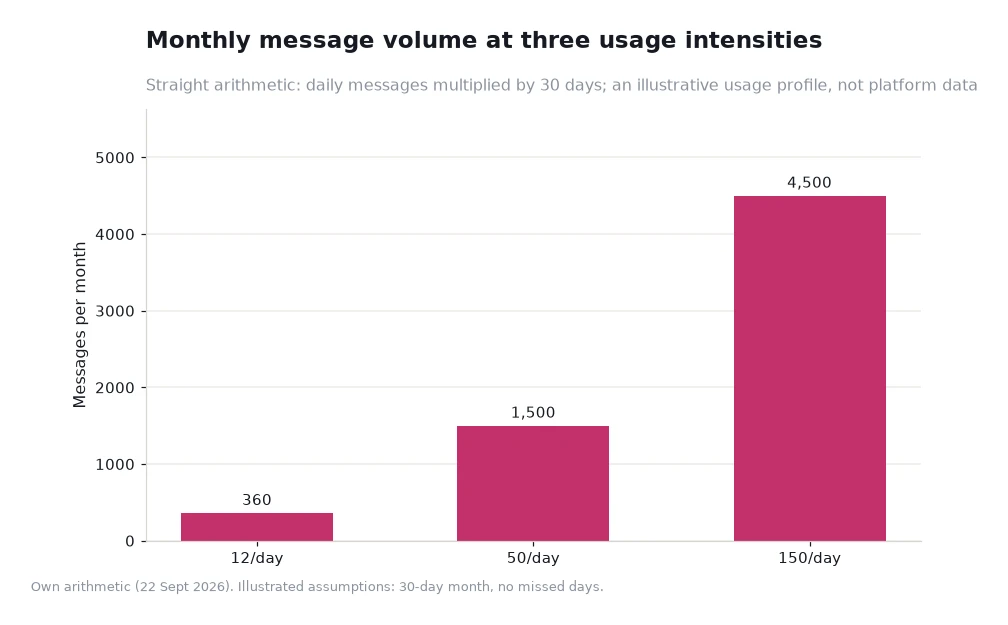
- Volume is easy to underestimate: 12 messages a day is 360 a month, 50 a day is 1,500 and 150 a day is 4,500 — know which shape of use you are committing to.
Check one: what the content is
The first document to find is the one that defines the material on offer. A legitimate adult text service states this plainly: AI-generated text, no real person depicted, no images or video produced by the site. A statement carrying a revision date is a stronger signal than one without, because it shows the page is maintained rather than left behind.
This matters for legitimacy in a practical way. If a service describes its content in terms that do not match what it shows you, the mismatch is the finding, and it is worth stopping there.
Check two: who to contact and how
A credible service publishes at least two routes for problems: a per-item report mechanism and a general contact address. On this platform every content page can be reported and [email protected] is the published address for both content and compliance questions, with a removal policy and a complaints policy describing the process.
The tell here is specificity. Vague promises about responsiveness mean little; a named address and a written procedure are checkable. If neither exists, there is nothing to escalate to when something goes wrong.
Check three: the terms you are agreeing to
Open the plan page and the terms in the same session and read them as one document. The questions to answer are narrow: what is included, how a renewal works, and how to cancel. You do not need to like the answers; you need to have read them before you act, because the alternative is discovering the terms afterwards.
Do this on the device you will use for the account, since terms pages are easier to read on a large screen than a phone, and keep the browser tab open until you have finished the comparison.
Check four: consistency of name and address
Look for the same brand name used consistently across the pages, a copyright year in the footer, and internal links that point where they claim to. Crushon's footer carries a 2025 copyright year and its navigation separates Characters, Memories and Creators — small details that are hard to fake at scale and easy to check.
| Check | What to look for | Good sign | Warning sign |
|---|---|---|---|
| Content statement | A dated page defining the material | AI-generated text, no real person | Claims that cannot be checked |
| Contact routes | Report mechanism plus an address | Published removal and complaints policies | No named contact at all |
| Plan terms | Inclusions, renewal and cancellation | Stated in plain terms on the page | Terms only discoverable after committing |
| Consistency | Same name, links that resolve | Coherent navigation and footer date | Broken links and mixed branding |
| Content type | Filters and guidelines published | Filtered, Unfiltered and 18+ tiers visible | Impossible claims about what is offered |
Worked example: what usage shape you are committing to
Before paying attention to any plan, estimate the shape of your own habit, because it decides which features matter. Multiply three daily figures by 30 days. At 12 messages a day: 12 × 30 = 360 a month. At 50: 50 × 30 = 1,500. At 150: 150 × 30 = 4,500. The three readings are 360, 1,500 and 4,500, and the largest is 12.5 times the smallest.
Convert one of those into time. Fifteen hundred messages at 40 seconds each is 60,000 seconds, or 1,000 minutes, which is about 16.7 hours a month — roughly 25 minutes a day. The message counts, the seconds per message and the 30-day month are all illustrative assumptions rather than platform data.
The purpose of the arithmetic is comparison, not prediction. A habit that lands near 360 messages a month and one that lands near 4,500 have almost nothing in common, and a reader who knows which one they are will read a plan page very differently from one who is guessing.
Where to look, in order
Do the checks in a fixed order so that nothing gets skipped. Content statement first, contact routes second, plan terms third, consistency last. Each one takes a couple of minutes, and any single failure is a reason to pause rather than to continue on momentum.
The three pages that carry most of the weight here are the 2257 compliance statement, the complaints policy and the plan information on the unlimited plan page. Read them in that order and the remaining question is simply whether the service as described matches the service you want to use. One useful cross-check is to compare what the ai porn chat overview claims against what the policy pages state, because the two should not pull in different directions. A Porn Chat AI platform that answers those three clearly has done the part that a reader cannot do alone.
Keep a copy of what you read. Three bookmarked pages and a note of the date you checked them make a second review fast, and they turn an impression into something you can point at directly if the service changes later on.
Frequently asked questions
What is the single strongest legitimacy signal?
A dated content statement that describes the material precisely, paired with a named support address and a written removal procedure. All three are checkable facts rather than assurances.
Should I verify before creating an account?
Yes. Every document mentioned here is public, so the checks can be completed before any account exists, which is the point of doing them first.
Does the platform promise privacy in absolute terms?
No. Its wording describes a private and secure environment with state-of-the-art encryption, which is a statement about handling rather than an absolute claim.
How long should the whole check take?
About fifteen minutes at a comfortable pace, and closer to five if you are only confirming the content statement and the contact routes.
Read first, then decide
Legitimacy is a reading task, and it is finished before any decision is made. Find the content statement, confirm the contact routes, read the plan terms and look for consistency across the pages; if all four hold up, the service has earned a trial rather than your trust in general. Keep the notes you made while checking, because the same four questions are worth re-running a year from now.
Data and sources: the 2257 compliance statement, the published removal and complaints policies and the site's plan pages[1], read 22 Sept 2026. Message volumes and time estimates are own arithmetic on an illustrated usage profile and are not platform data. Intended for adults 18 and over.